


What a florist learns from visiting a British flower farm
Last week, Alice and Emily packed a bag and headed to Hitchin to visit Beth at Flos in Bloom’s Flower Farm - a beloved and long-time supplier of British flowers to Botanique Workshop. It was, it’s fair to say, an amazing but very, very hot day! Luckily Beth had an ice bath at the back of her plot which, along with Fondant fancies, coffee, and a lot of flower chat, the team well and truly took advantage of. Here’s what they came away with.
 |
 |
 |
 |
Seeing flowers at their source
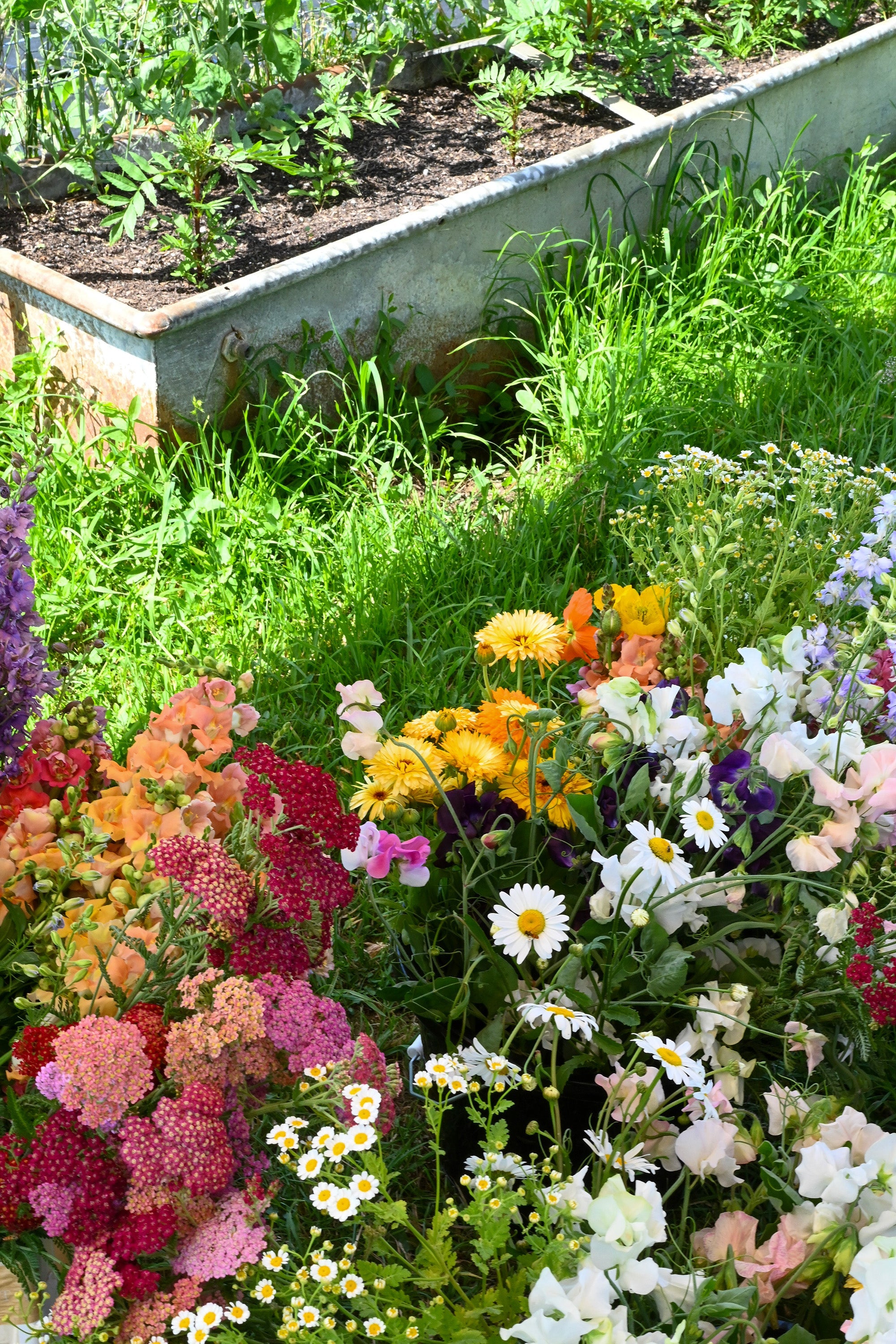
Seeing flowers in the ground, before they end up in our florist buckets – is invaluable. No plastic wrap, no bucket, no market stall. Just flowers in the ground, growing and moving freely.
Emily says,
“I find it so interesting to see how flowers look in the ground. The different heights of stems, the colours in the natural daylight, not wrapped in plastic. Seeing all of this allows me to more closely imitate this wild and whimsical look when I’m back in the studio arranging the flowers. It’s hard to overstate how much that informs the work.”
Alice and Emily spent time walking the plot with Beth - seeing sweet peas climbing their vines, larkspur standing tall, violas in full bloom, and the very early signs of what’s still to come: dahlia buds just beginning to form, ammi fronds unfurling, sunflower stalks reaching upward. It’s a reminder that a flower in a bouquet is just a small snapshot of the life of the bloom.
The importance of British-grown flowers
The obvious one is environmental. Homegrown British flowers mean fewer transport miles, harnessing mother nature’s seasons and far fewer pesticides entering the food chain.
There’s an economic argument too. The more florists that choose British-grown stems where they can, the more viable those farms become - and the richer and more varied the supply gets over time. Supporting British flower farms helps sustain the floristry industry in the UK, and we truly believe it’s one well worth saving.

What grows together, goes together
One of the things farm visits do best is spark ideas. Seeing which colours sit next to each other in a field, which textures naturally coexist, which varieties are peaking at the same moment - that’s seasonal inspiration you can’t get from a price list.
Botanique’s style has always leant toward the wild, natural, unconstructed and whimsical. British stems tend to lean into this perfectly. The sweet peas, the larkspur, the garden-grown violas Alice and Emily spotted at Flos - all of it feeds directly into the kind of wedding work, event floristry, and everyday bouquets that feel like they’ve just come in from a garden rather than a warehouse.

The grower-florist relationship
Strong relationships between farms and florists are super important. They’re what makes ambitious, unique and sustainable floral designs possible.
British-grown flowers come with their own set of variables. The unpredictability of the weather for one! Differing temperatures and water fall may affect growth and quality, meaning substitutions can happen - sometimes at short notice. However having a strong, open and honest relationship means that the bigger vision will always be achieved.
Staying in close communication and nurturing close relationships with Beth - and with growers like her - is fundamental to how we work.

Going Dutch
It’s worth being honest about something, because it comes up a lot in the flower world.
There’s a real tension - felt by florists, growers, and customers alike - between British and Dutch-grown flowers. And the truth is, for us, it isn’t a black and white issue.
We aren’t in a position to close our doors over winter. When British supply is limited, Dutch flowers keep the studio running. We don’t think the answer is to make that a source of guilt. What we do think is that the choice of when and where to use British flowers matters the most. And we try to make that choice as often and as thoughtfully as we can. These trips and relationships, like the one we have with Beth, are part of how we ensure we live up to our commitment to use more British Blooms.

Our standout picks from the farm
Emily admires,
“Sweet peas on the vine were a delight to see, climbing before they’re cut gives a completely different appreciation for how they move in an arrangement. The larkspur. The violas. And a the ones budding - the dahlias, the ammi and the sunflowers. Lot’s of new ideas to bring back to the studio!”
 |
 |
 |
 |
Read more
Introducing the Flower Tote Bag you didn't know you needed
I know we all have an abundance of tote bags .. but this one, this one is different. It's a flower tote bag! Designed by our team of talented and experienced florists this is the perfect way to t...
Read more
Guests treated to VIP Wreath Making Workshop on Bond Street
Here’s one we ran for a lovely client of ours, and it might give you some ideas about hosting your own Christmas Wreath making Workshop in London with Botanique Workshop.
Read more